Flying With Your Dog in Cargo: A Comprehensive Guide
Flying with a dog in cargo can feel super overwhelming, especially the first time!
Between airline rules, crate requirements, health certificates, weather delays, and the emotional experience of handing your dog over to airline staff, there are a lot of moving pieces to figure out.
I know because I’ve done it. Several times now, actually!
My dog Willow is a 60-pound mixed breed who has flown more than 5,000 miles over the past three years. We’ve traveled between Alaska and the Lower 48 multiple times, navigated weather delays, health certificates, TSA inspections, and more cargo drop-offs than I’d like to count.
If you’re planning to fly with a dog in cargo, this guide covers everything I wish I had known before our first flight, including airline requirements, crate setup, airport procedures, and practical tips that have made travel easier for both of us.
Whether you’re moving, traveling seasonally, or flying with your dog for the very first time, here’s exactly what has worked for us.
Disclaimer: This guide is based on my personal experience flying with my dog on Alaska Airlines. Airline policies change frequently, so always verify current requirements directly with your airline before traveling! Additionally, this post contains affiliate links. If you make a purchase through these links, I may earn a small commission at no additional cost to you.
Table of Contents
- Know Your Dog’s Travel Personality
- Choose the Right Airline and Route
- Get the Right Crate
- Visit the Vet
- Prepare Your Dog and Crate
- What Happens at the Airport
- During the Flight
- Alaska-Specific Travel Tips
- Frequently Asked Questions
1. Know Your Dog’s Personality
Before booking anything, it’s important to take an honest look at your dog and their behavior. Flying isn’t the right choice for every dog, and that’s okay.
Questions to ask yourself about your dog are:
- Is my dog generally anxious or fairly relaxed?
- How do they handle new environments?
- Are they crate trained?
- Can they comfortably spend hours away from me?
Willow has some separation anxiety, but she actually does surprisingly well while traveling. She was fully crate trained long before we ever flew, which made the transition much easier.
Dogs sometimes handle travel better than we expect. The anticipation is usually harder on us than it is on them.
2. Choose the Right Airline and Route
The airline you choose matters. We’ve always flown with Alaska Airlines, and they’ve always been great with Willow. You will read horror stories with any airline though, but we have never had a bad experience.
One policy of theirs I especially appreciate is their last-on, first-off policy for pets. Dogs are loaded after the luggage is loaded, and are unloaded first once the aircraft lands.
Before You Book
Check:
- Breed restrictions
- Weight limits
- Crate requirements
- Seasonal pet embargoes
- Airport-specific restrictions
If You’re Flying To or From Alaska
A few things I’ve learned:
- Avoid long layovers whenever possible.
- Check for active pet embargoes before booking (especially in Seattle).
- Avoid tight connections.
- Build flexibility into your schedule.
- Weather delays happen.
Alaska weather does not care about your itinerary! Expect and prepare for any potential delays. In general, our delays have happened in Alaska either leaving or going back to Skagway specifically on Cessna planes.
How I Book Our Dog’s Flights
Before purchasing my ticket, I call Alaska Airlines with multiple possible flight options. (I never attempt to book on an Airbus flight because pets generally cannot travel on those planes in cargo.)
I ask:
- Is there room for Willow’s crate?
- Are there any active pet embargoes at any of the airports we’re flying in/through/to?
- Are there any airport-specific restrictions?
Once I know a flight can accommodate her kennel, I book my ticket and then immediately call back to add Willow to the reservation. We have always paid for her to fly once we’re at the airport at check-in.
One important thing to know: you cannot check in with Alaska Airlines online or on the app when traveling with a dog in cargo! It simply will not let you. But don’t panic, that is totally normal – you have to check in at the airline’s counter for your flight when you have a pet.
If multiple people are on your reservation, whoever the dog is attached to is the one that will not be able to check-in. Other people in your reservation can check-in for their flights on the app or online.
I always arrive at least three hours before departure.
3. Get the Right Crate
This is not the place to cut corners.
Most airlines require an IATA-compliant crate with:
- Ventilation on all four sides
- Metal hardware and bolts
- Food and water dishes
- Enough room for your dog to stand, turn around, and lie down comfortably
If your dog barely fits, there’s a chance you’ll be turned away so make sure you put your dog in the kennel to test it before you fly.
My Cargo Crate Setup
For Willow’s flights, I use:
- An AirTag secured to the outside of the kennel; a TSA agent told me they might remove it when we departed from STL once, but no one at STL, SEA, or JNU has ever removed it and it’s still on there today.
- A waterproof crate pad – make sure to carry an extra cover for the crate pad with you in your carry-on.
- Attached food and water bowls
- Extra zip ties
Important note: in my experience, dogs are not allowed to wear collars inside cargo kennels. They will make you remove your pet’s collar before flying on Alaska Airlines. This is why I put the AirTag on the kennel and not my dog’s collar.
4. Visit the Vet
Most airlines require:
- A health certificate
- Current rabies documentation
- Confirmation your dog is fit to fly
Requirements vary by airline and destination, so always verify directly with your carrier!
If your dog experiences anxiety, talk with your veterinarian well before travel so you can test any potential medication your dog might need. For Willow’s first few flights, we used medication recommended by our veterinarian. Today she flies without it!
5. How I Prepare Willow’s Crate
This was the part I struggled to find reliable information about before our first flight. I was able to find ONE example online, that’s it. I’m happy I’m able to walk you step-by-step on how I’ve set it up each time we’ve flown today! My system has successfully worked multiple times at STL, SEA, JNU & SGY.
Documents
I place our dog’s health certificate and rabies certificate inside a page protector and then use packing tape to secure it to the top of the kennel. Packing tape stays on but also easily comes off when we make it to our destination.
Our documents are able to be placed in the same page protector due to their formatting, which has been nice.
Food
I tape a sandwich-sized bag of dog food to the top of the kennel. Most airlines require food being on top of the kennel in case of unexpected delays. We’ve never had the airline actually use it before.
Bowls
Food and water bowls stay attached to the inside of the kennel door. We use these and they work perfectly.
Airline Paperwork
Leave plenty of room for the airline’s paperwork. They’ll add an additional form and several stickers during check-in.
For Willow’s first flight, I made her a cute little “About Me” document so everyone knew it was her first flight. I also included both of me and my husband’s cell phone numbers on the document. (You can get the template for free here!)

In the above example, I ran out of “Live Animal” stickers so I printed off the sign on a piece of paper and taped it on there. Normally the airlines have those stickers, but it made me feel better personally (lol).
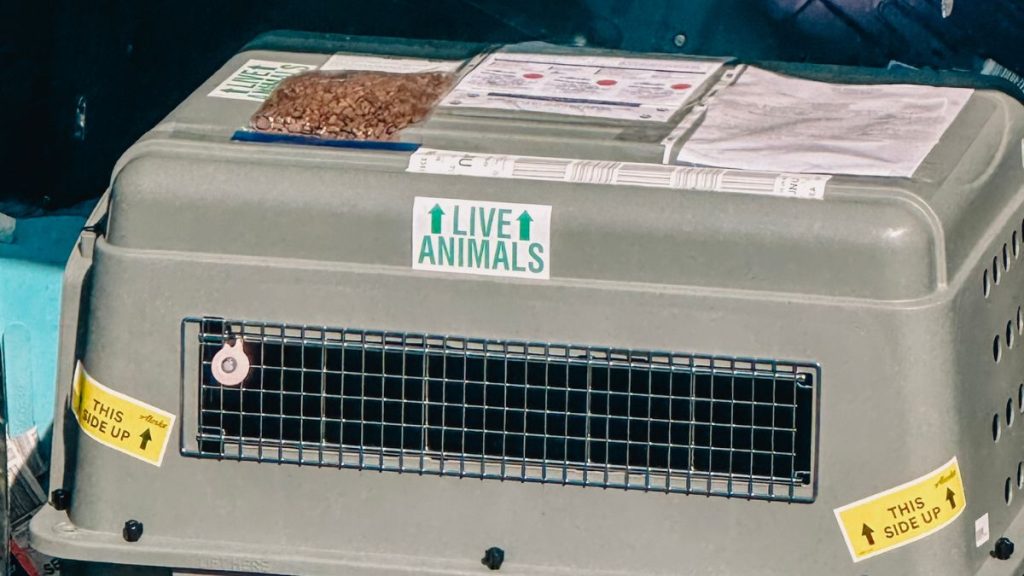
The image above shows the stickers Alaska Air added and where the AirTag is on my dog’s kennel. You also get a glimpse of the full paperwork setup on top.
6. What Actually Happens at the Airport
This was the part that made me the most nervous before our first trip. I was really nervous about the TSA inspection and that something would go wrong and we wouldn’t be able to get on our flight (hello anxiety), but it all went very smoothly.
Step 1: Check-In
Airline staff will:
- Verify your reservation
- Tag the kennel
- Add live animal stickers
- Have you complete pet paperwork
- Take your payment for your pet
Step 2: TSA Inspection
You’ll bring your dog and crate to the designated TSA area or the TSA agent will come directly to you, depending on what airport you’re in.
TSA will review your documentation, inspect the kennel, and potentially check crate requirements.
After inspection, your dog goes inside the kennel and the kennel gets secured with zip ties. TSA then takes your dog to the holding area where they wait until they’re loaded for transport.
Always bring your own zip ties. We have had to provide our own zip ties before when TSA ran out. Luckily, I was prepared for this, but it’s something that is potentially forgettable when you’re trying to remember everything.
The Emotional Part
I’m not going to pretend this part is easy! Handing your dog over is emotional, and I’ve definitely cried a few times in the Seattle airport.
But every TSA employee, airline employee, and baggage staff member we’ve worked with has treated Willow with kindness.
7. During the Flight
Dogs travel in a pressurized, temperature-controlled section of the aircraft. When I board our flight, I always (ALWAYS!) tell a flight attendant that we have a dog on board as we board. On Alaska Airlines, they give you a slip of paper from your dog’s Alaska Air paperwork that’s attached to the kennel to let you know your dog is on board.
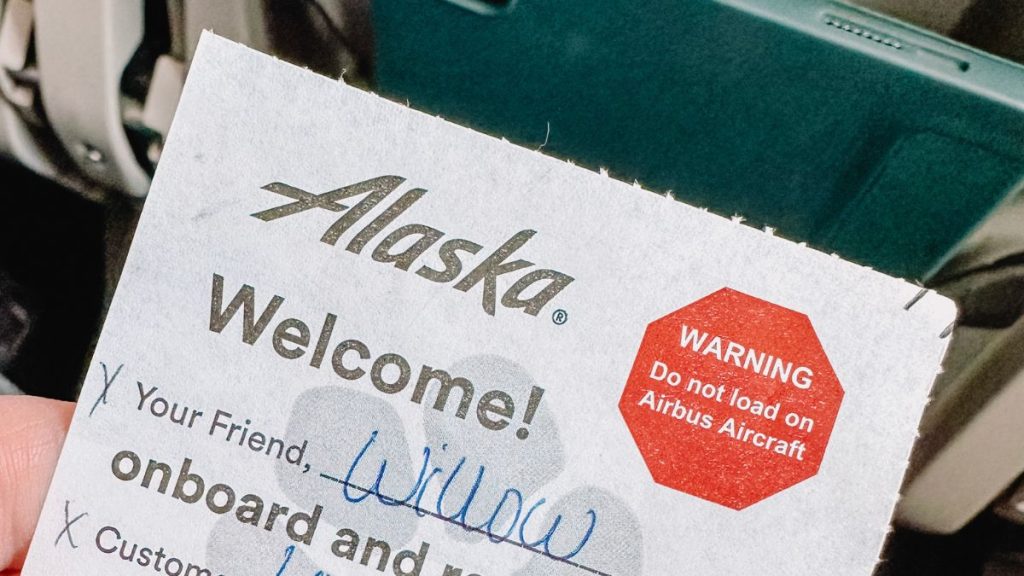
Alaska Airlines crews have consistently been wonderful about checking and confirming that Willow is loaded safely. One time, I was missing my slip and the flight attendant refused to close the door until she made sure I had my slip. Needless to say, she was my favorite on that flight!
After landing, you’ll head straight to the oversized baggage area. You’ll have to find it yourself a lot of times, so take a look at an airport map online before you go.
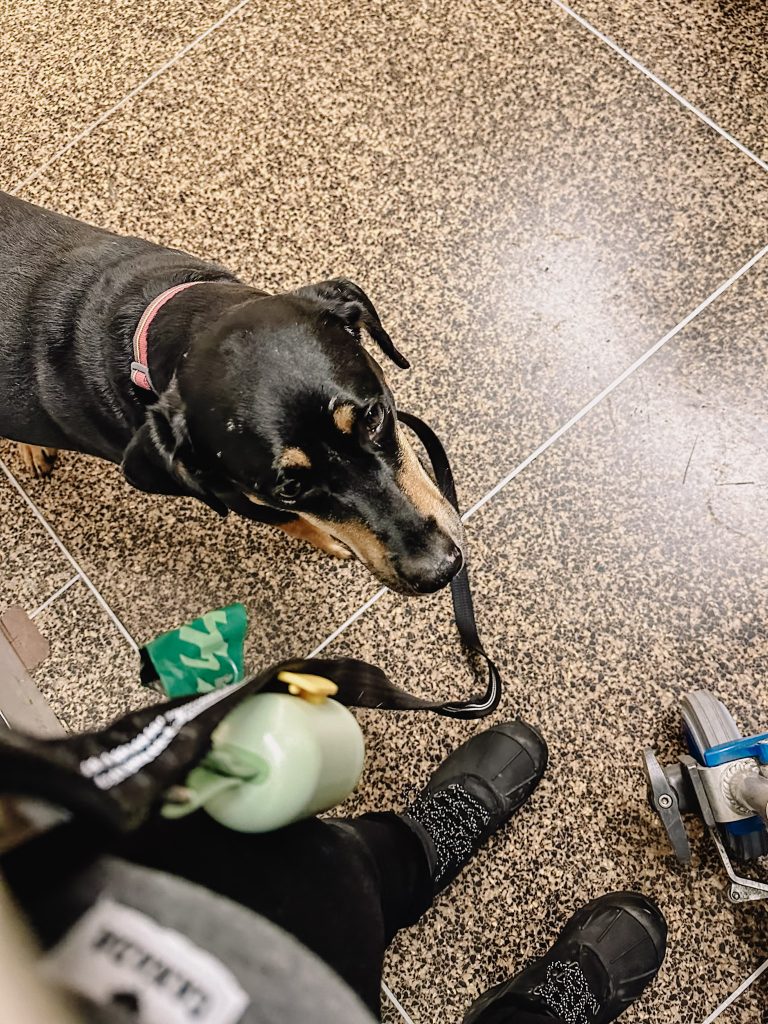
You’ll grab your pet, and the first thing we always do is head to the pet relief area! After that, we offer some water in one of our pup’s travel bowls that I keep in my carry-on.
8. Alaska-Specific Travel Tips
Traveling with a dog in Alaska comes with a few extra challenges.
- Especially if you’re traveling through Southeast Alaska.
- Never schedule something critical immediately after arrival.
- Have a backup plan – flights get cancelled and knowing your options ahead of time can save you stress later.
- Avoid tight connections.
Frequently Asked Questions
Is flying in cargo safe for dogs?
Every owner has to make that decision for themselves. For our family, flying is the safest and least stressful option available when traveling between Alaska and Washington. (Our dog would be stressed for so much longer if we took the ferry.)
Can dogs wear collars in cargo?
Generally, no. Most airlines require collars and harnesses to be removed before travel.
Do dogs need a health certificate to fly?
Most airlines require a health certificate issued by a veterinarian within a specific timeframe before travel. For Alaska Air, we always go within a 10 day window before our flight,
How much does it cost to fly a dog in cargo?
Costs vary by airline, route, crate size, and destination. In the past, it has cost us $150 on Alaska Airlines for each flight for Willow. (For example, if you have two flights, that means you’ll spend $300.)
What size crate does my dog need?
Your dog should be able to stand, turn around, and lie down comfortably. Measure your dog, research online, and then look for the appropriate kennel size.
Final Thoughts
If there’s one thing I’ve learned after flying thousands of miles with Willow, it’s that the anticipation is usually worse than the actual flight! The first trip is scary and you’ll double-check every piece of paperwork, worry about every delay, and probably convince yourself you’ve forgotten something important.
But once you’ve done it once, the process becomes much easier. We are old pros at it now.
Willow has now flown thousands of miles between Alaska and the Lower 48, and every trip has given me more confidence in her and the process. Your dog is more resilient than you think!
With the right preparation, flying can be a safe and practical option when driving simply isn’t realistic. If you’re preparing for your first flight with a dog, I hope this guide makes the process feel a little less overwhelming!